











Brandon Flowers
Add to Calendar
Tickets are non-transferable until 72 hours prior to the show time. Any tickets suspected of being purchased for the sole purpose of reselling can be cancelled at the discretion of 9:30 Club / Ticketmaster, and buyers may be denied future ticket purchases for I.M.P. shows. Opening acts, door times, and set times are always subject to change.
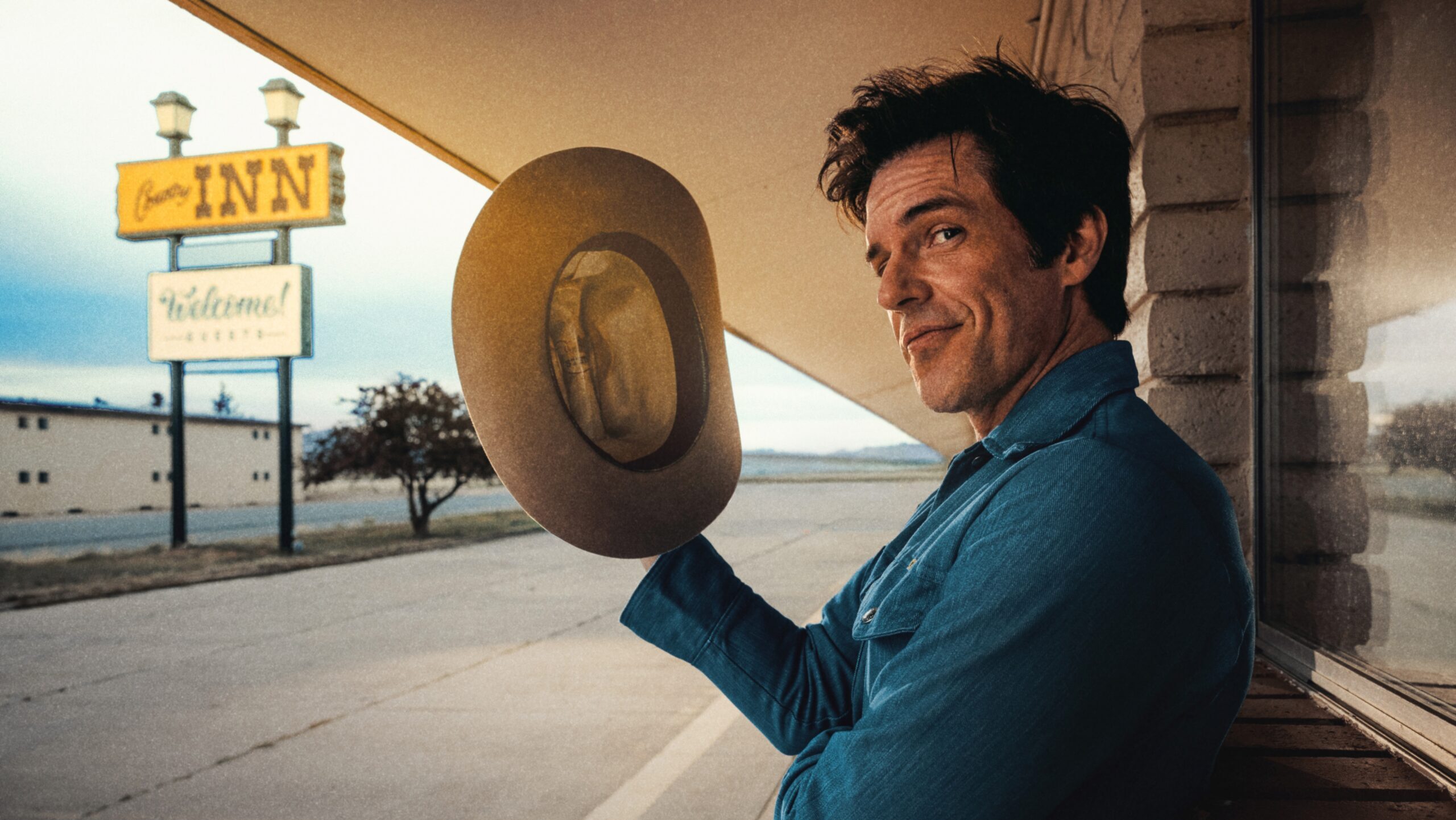
Brandon Flowers
“I’ve been keeping the secret of my upbringing,” Brandon Flowers laughs. We all know the story, fittingly mythological: a Mormon raised in the seedy glimmer of casinos, destined for rock ‘n’ roll stardom. But before that, Flowers was a teenager in small-town Utah, taken with the new wave and post-punk and Britpop his brother had shown him, yet spending just as much time driving the countryside with his dad and hearing Johnny Cash and Waylon Jennings songs reflect his surroundings back at him. Those seemingly disparate influences have converged in Flowers’ music for twenty years, but he only rarely wrote about that chapter of his life. As he entered his forties, he began reflecting not only on the whirlwind of his adulthood as a rockstar, but also on his formative years in Utah. Ideas swirled, then arrived in the form of the music that first taught him about storytelling. They culminated in Flowers’ third solo album Thrasher, the most personal collection of songs he’s ever written.
After moving back to Utah, Flowers began to pull the curtain back on The Killers’ most recent album, 2021’s Pressure Machine. Though most often associated with Las Vegas, most of Flowers’ youth actually occurred in Nephi, the small Utah town some two hours south of Salt Lake City. Now back home again, he showed his own children the scenes that made him who he was as a young man. Much of the music Flowers has worked on in the ensuing five years began as a direct continuation, forging deeper into foundational sounds and foundational memories. He began to recognize the “big and shiny fantasy” of Las Vegas that so often courses through The Killers’ music wasn’t the right home for this writing, and he embarked on his first solo endeavor in over a decade. Though Americana and Western stylings have often mingled with the alternative traditions in The Killers’ DNA as far back as their 2006 sophomore outing Sam’s Town all the way on to Pressure Machine, Flowers found that he’d tapped a new, rich vein of his songwriting: “As I’ve gotten older, I’ve found my way back to my father’s music — ‘Country-Western’ — and discovered that the stories I carry really feel most at home in the skin of this beautiful American tradition.”
It was only an idiosyncratically and eternally American form that allowed Flowers to find the grain and gravity he needed. He wrote honky-tonk ragers, highway rambles, and winsome ballads, all lived-in and organic. Much of Thrasher features songs written in persona thinly veiling stories about Flowers’ friends and family from his teenage years until now, from Vegas to Nephi and back again, all rendered with the balance of sadness and humor inherent to country music. “I used to think my experiences weren’t interesting enough,” he says. “It took a lot of living for me to recognize that my story was never just my own. Other people have felt these things. Turning them into songs just helps me make sense of it.”
Eventually, Flowers decamped to Nashville to work with producers Shawn Everett and Jonathan Rado, picking up a collaboration begun with 2020’s Imploding The Mirage and Pressure Machine. Flowers rolled into town confident of the potency in these new songs, but nevertheless found himselfawed by the musicians gathered for the sessions. The band were all Nashville pros, ranging in age from their thirties to eighties, having played on everything from Elvis records to ‘70s outlaw country albums to ‘90s country crossover hits. “Every day we’d start late because people would sit and tell stories,” he recalls. The band featured local legends like longtime Gillian Welch collaborator David Rawlings on guitar, the prolific and influential pedal steel player Bruce Bouton, and 85-year-old Charlie McCoy, a journeyman harmonica player who appeared on all four of Bob Dylan’s iconic Nashville records.
The group played through each track three or four times live in the room. One of them ended up being the take. That was it. Flowers hadn’t recorded that way since Hot Fuss and Sam’s Town, and soon found himself swept up by the energy. “It was one of the highlights of my recording career. There was so much experience and competence in the room. I didn’t want it to end. We cut 23 songs in three weeks,” he says. Half of those songs were destined for Thrasher, and half for a still-mysterious sister album that emerged from the same fruitful burst of writing but covered different thematic territory. It all kicks off with “Does It Ever Cross Your Mind.” Buoyed by a loping rhythm and pedal steel, Flowers sings of the happenstance beauty in how the cosmos places us next to the people with whom we spend the rest of our lives. Though each song emerges from love in some form, many catalogue darker events: “One Of Us” picks up the swing of “Does It Ever Cross Your Mind” but acts as tribute to a brother-in-law who suddenly passed several years ago, while “Miss America” slows it down to travel from ‘80s shopping mall pageants to fraught early childhood memories. There are classic American parables, of lofty dreams that didn’t quite take in the intimate cinema of the dusty orchestration in “Plans.” Simultaneously poignant and tongue-in-cheek, “Paradise” pulls from Flowers’ extended family working and aging in the casino ecosystem of Vegas. Mariachi horns and sunburnt guitar evocatively conjure the “Red Ground” namechecked in its title, while “Tiger’s Blood” returns to the Nephi glimpsed on Pressure Machine with a seamless blend of Thrasher’s rough-hewn aesthetic and Flowers’ customary arena-rock scope.
In its final moments, Thrasher throws it all together in the phantasmagoric “An American Dream”: Flowers remembers his mom while watching his dad near the end of his life, passes billboards talking about eternity, meets Elvis in a Tesla, and asks him if it was all worth it. Though psychedelic in nature, the song is littered with references to Flowers’ life, a grand finale to an album of aged family photographs and snapshots from across the decades. In the end, Thrasher is a heartfelt and adventurous document of all the people Flowers has known and loved and feared, but also a portrait of a man making peace with himself and the places, sights, and sounds that made him. “I don’t know when is the appropriate time to figure out who you are, but it’s starting to come together for me now,” Flowers concludes. “I’m always lurking somewhere in the shadows of the stories I tell. But on Thrasher I’m in the kitchen, I’m on the phone, and I’m waking the neighbors.”
9:30 Club
815 V St. NW
Washington, DC, 20001